TL;DR: Brilliant engineers fail in boardrooms not from lack of knowledge, but from Social Courage Deficit – here’s the data-backed improvisation framework that fixes it.
We’ve all been there. You’re sitting in a high-stakes client meeting with your newest recruits. These are graduates with first-class degrees and exceptional technical potential.
But when the client asks a probing question about the project, the room goes cold. Your brilliant grads (the ones you hired for their “fresh perspective” ) sit in total silence. After the meeting, they come to you with brilliant answers and ideas.
So what happened? Later, they admit the truth: they were “secretly terrified” of asking a stupid question in a room full of experts.
The High Cost of Silence
Our unique background, including being a Chartered Civil Engineer who spent a decade managing major infrastructure projects, means we’ve seen this pattern repeatedly. This isn’t just an awkward social moment but a significant business risk.
Research from the Project Management Institute (PMI) reveals that poor communication leads to project failure 33% of the time. When your technical leads stay silent, you’re not just losing their “fresh perspective” – you’re increasing project friction costs and risking your bottom line.
Why Junior Engineers Don’t Speak Up
We spend years training technical minds to be “right” and to optimise for correctness. Then we drop them into a professional environment where communication is unscripted and the “right” answer doesn’t always exist.
The result? A lack of professional maturity to navigate the unscripted moments of stakeholder management. Traditional L&D often labels this a lack of “soft skills,” but for technical teams, that term feels imprecious and vague.
What they actually lack is Social Courage.
What Traditional Training Gets Wrong
Most corporate training approaches this problem with:
Lecture-based “communication skills” workshops
Generic presentation training
Passive learning that doesn’t simulate real-world pressure
These methods fail because they don’t address the core issue: engineers have been conditioned to fear being wrong more than they value contributing. You can’t lecture someone into courage.
Applied Agility: Rapid Prototyping for Communication
To bridge this gap, we move beyond passive learning. At Think Fast Collective, we treat graduate engineer communication skills as a technical discipline that requires Rapid Prototyping.
We use applied improvisation as a framework to build psychological safety (the number one factor in high-performing teams, according to Google’s Project Aristotle study). By treating a boardroom briefing like a low-stakes simulation, we give graduates the social agility to:
Prototype Ideas Verbally: Moving from the paralysis of perfection to iterative problem-solving in conversation
“Yes, And”: Shifting from a culture of silence to collaborative contribution
Listen to Understand: Rather than just “waiting to speak” while the client is talking
The Data: 46% More Confidence in 60 Minutes
Our methodology uses anonymous benchmarking tools (like Mentimeter) to establish a baseline before every session and measure the shift immediately after.
In our work with the UK Association for Solution Focused Practice, we saw participants’ self-rated confidence in contributing ideas in large group settings increase by 46% in just 60 minutes – moving from an average rating of 2.9 to 4.2 on a 5-point scale.
Real-World Impact
Our approach has been validated across diverse technical and academic contexts:
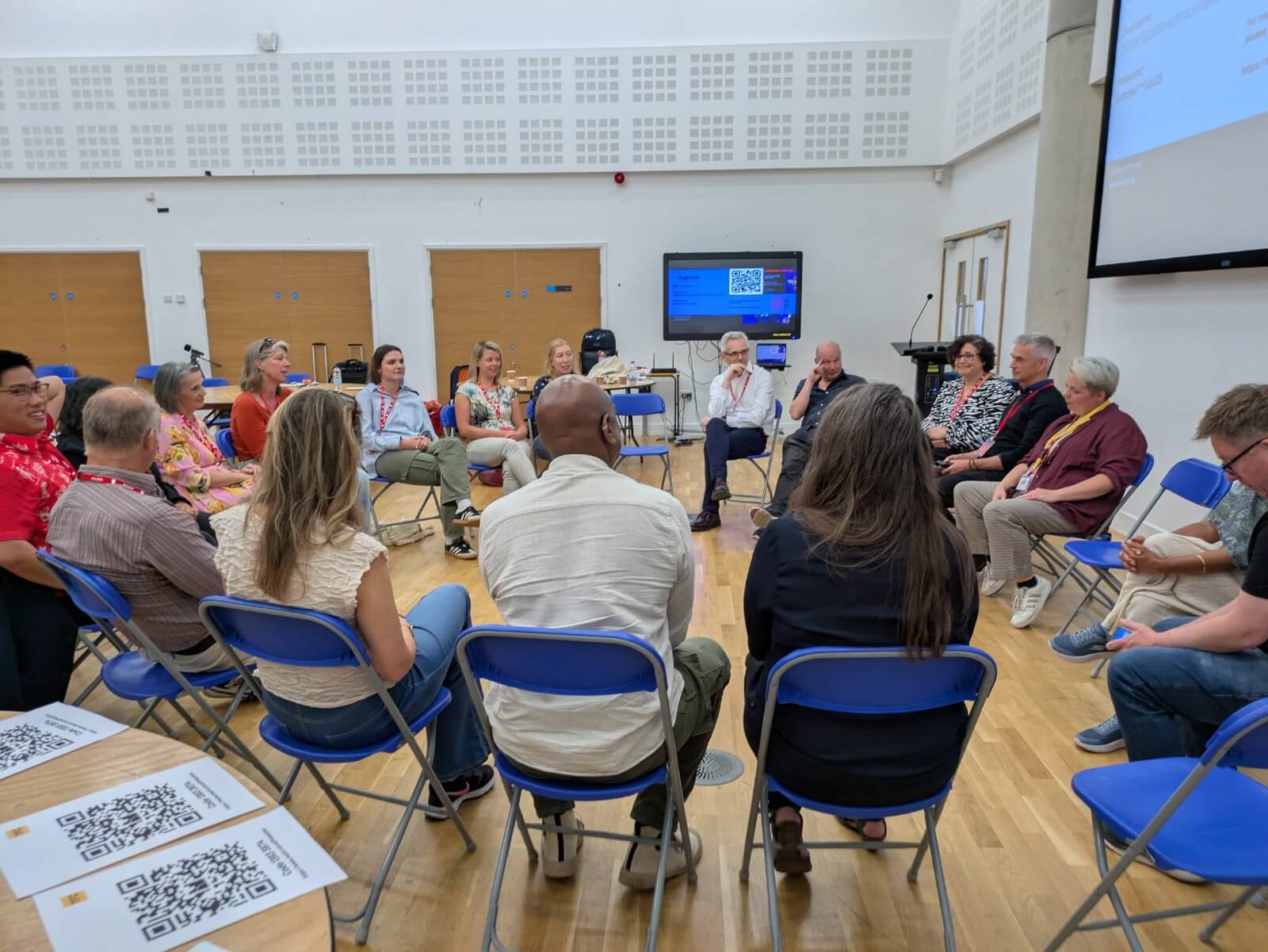
PL Projects Leadership Development (12 participants, 120 minutes):
100% of participants stated they started to forget their fear of failure by the end of the session
100% reported being given the opportunity to speak up and practice leadership qualities
Participants described feeling “very relaxed and safe” and “felt less self-conscious in the end”
We didn’t make them better project managers. We gave them the social courage to actually use the expertise you hired them for.
From Theory to Instinct
The good news? Social courage is trainable. Just as your engineers learned to iterate on technical designs, they can learn to iterate in real-time conversation. The framework exists; your team just needs guided practice.
Our core philosophy is simple: teams already have the talent, but if people don’t feel comfortable sharing their “worst” ideas, you will never truly get innovation or their “best” ideas.
Closing the Gap
If your graduates are sitting in silence, you’re losing money and risking project success. It’s time to move teamwork from a theory they understand into a habit they perform instinctively.
The 46% confidence shift happens in the first session—but sustained behavior change requires 3-6 touchpoints integrated into your existing onboarding program.
Ready to bridge the STEM maturity gap? Let’s have a brief 10-minute chat to discuss your team’s specific challenges and whether our rapid-prototyping approach fits your context.
[Book a 10-Minute Discovery Call]